


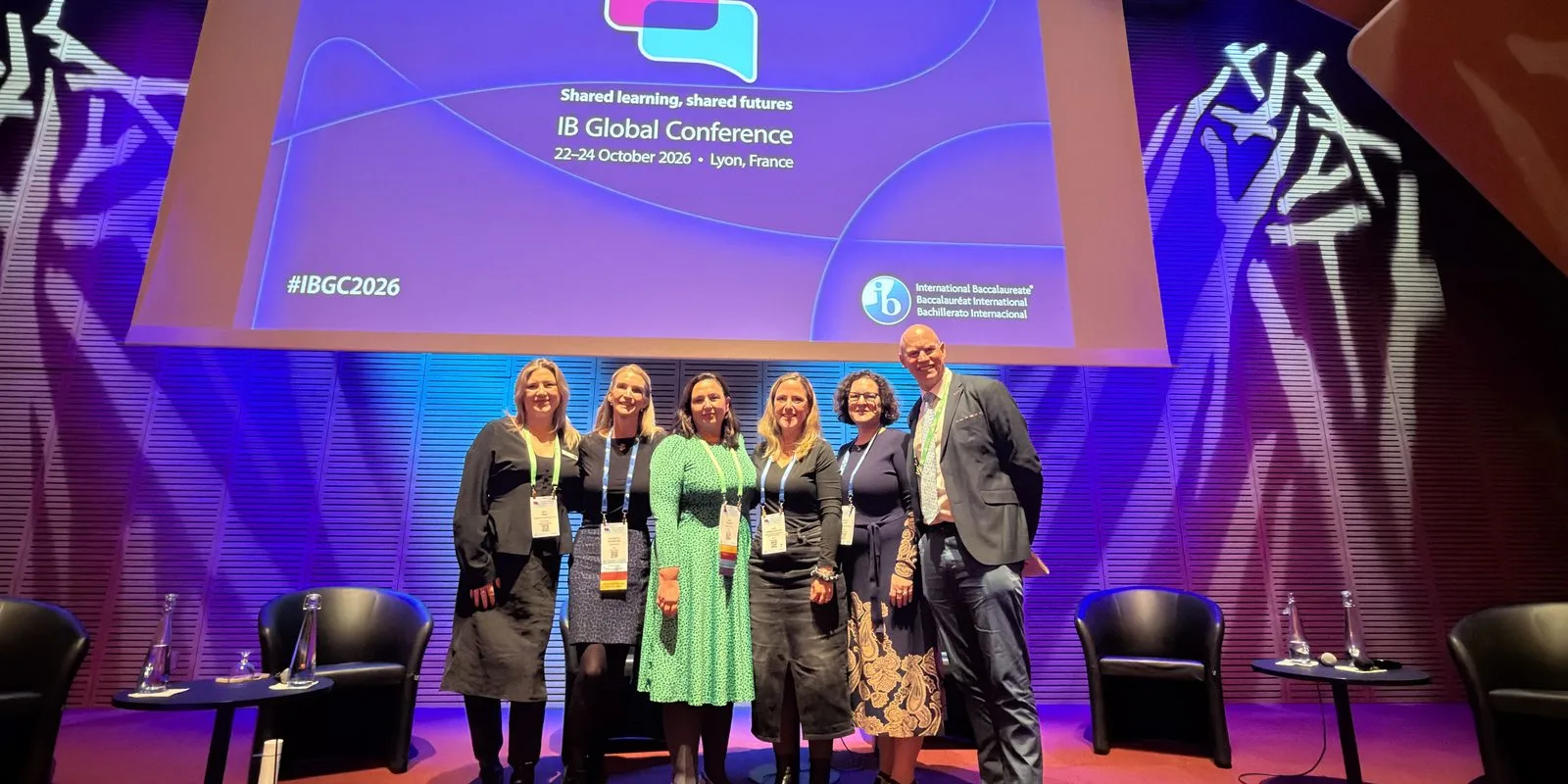
The AI panel at the IB Global Conference in Lyon, October 2026
Schools often say they give students voice. The International School of Düsseldorf (ISD) has gone further, involving students in decision-making.
Sibylle Harth, ISD's Director of Teaching, Learning and Technology, shared the school's approach at the IB Global Conference in Lyon in October 2026. She was one of four educators on a panel hosted by Faria Education Group about how their schools are handling AI.
Founded in 1968, ISD is an IB continuum school for students aged 3 to 18. In 2026, it marked 50 years since its Diploma Programme authorisation and 20 years of PYP and MYP authorisation, with the 50th DP cohort now underway. "A great time to pause and rethink," Sibylle said.
Responsible Innovation by Design
Sibylle reminded the audience how generative AI first reached schools nearly four years ago, right in the middle of TOK essay season. "We’re building the plane as we're flying it," she said, "in a world where things are changing faster than many of us can keep up with."
ISD embraced AI early, encouraging teachers to explore its potential for teaching and learning while developing responsible practices. The school published its first AI guidelines in April 2024 and invested in staff AI literacy. Experience showed that strong governance guardrails were essential to building confidence and enabling responsible innovation with evolving technologies.
"That's a humility we want to bring to the table," Sibylle said. "We continue to learn and adapt."
Why Students Belong in the Decision
The question Sibylle put to the room was simple: how can schools learn from and with their students?
ISD's setting gave it extra weight. In Germany, employees have a legal right to participation in certain workplace decisions. "What does that mean in a school setting?" she asked. "Shouldn't students be part of decision-making in their education?"
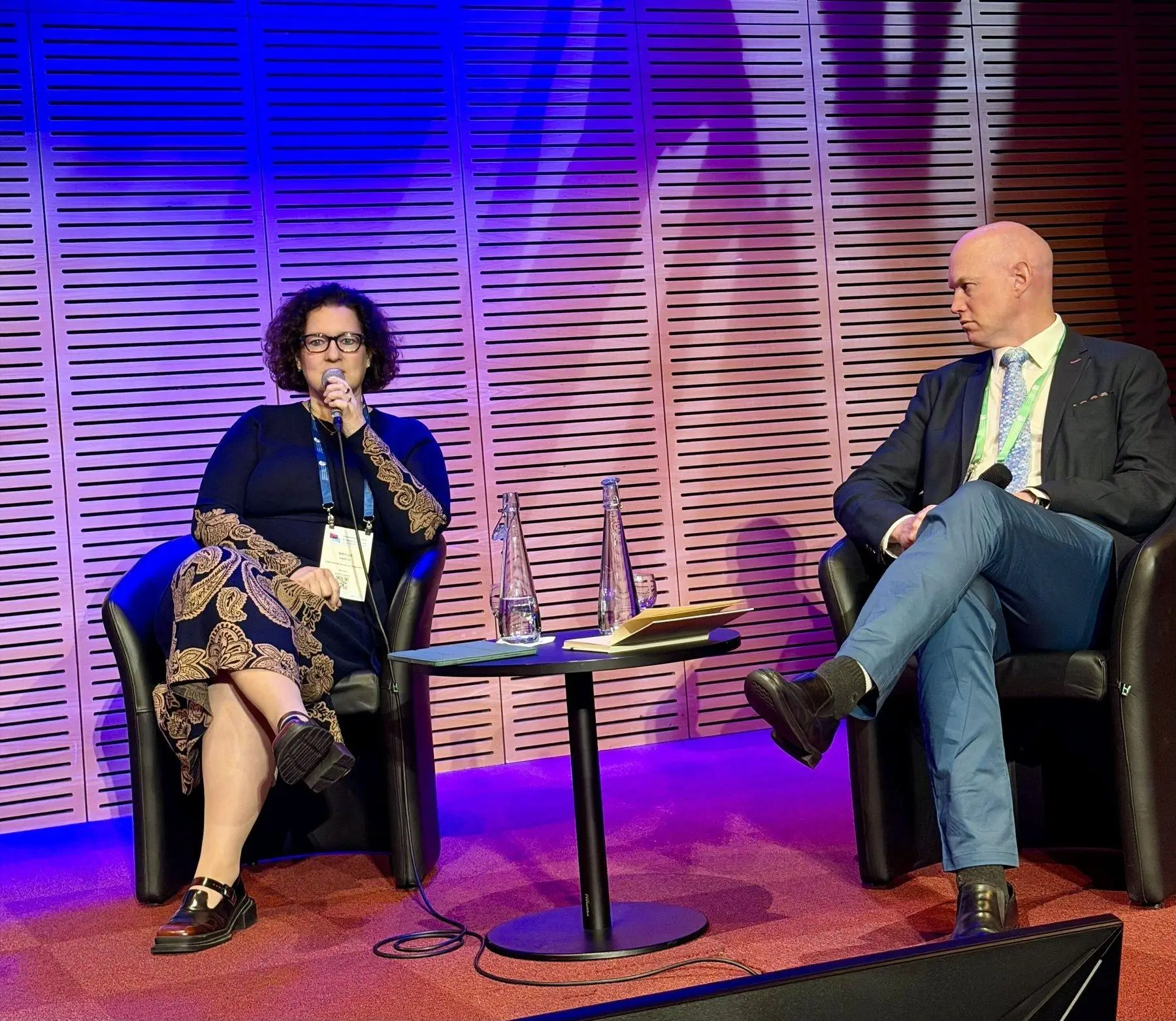
Sibylle Harth, International School of Düsseldorf
She was careful to separate this from "student voice", which she said risks becoming a cliché. Asking students for their views is one thing. Giving them a meaningful role in shaping decisions that affect their learning is something else.
To make this principle visible at the conference, Sibylle brought four student-recorded videos to the panel discussion. Three students had volunteered to record their thinking after taking part in surveys and focus group conversations in the spring. Their reflections brought student perspectives directly into the room.
What the Student Survey Revealed
In March 2026, ISD invited students in Grades 5 to 12 to take part in an optional survey on AI. About 200 responded, and follow-up focus groups offered opportunities to explore the experiences and perspectives in greater depth.
The school originally expected input for its AI guidelines review. What it learned went much further.
-
There is no single student perspective on AI. Some were conscientious objectors who avoid AI altogether. Others use it to support understanding, brainstorming, revision and feedback. Others use it for quick answers when overwhelmed.
-
Environmental impact concerns emerged. Some questioned assignments that asked them to create posters or videos with AI when speed seemed to be the main benefit. Didn’t teachers understand the environmental cost?
-
Learning versus dependence as a recurring tension. Younger students often understood appropriate use through rules about right and wrong. Older students described more sophisticated uses but worried about dependence under academic pressure. In her video, Zara (Grade 9) explained how she changed her own practice after recognising that accepting AI’s answers was doing little for her learning. She urged students to think for themselves.
-
Trust and fairness are at a critical point. Students described inconsistent expectations between teachers and fears of being wrongly accused of AI use. They also questioned how transparently adults used it. Some even assume AI is used when it is not. “Are we being as transparent as we need to be?” Sibylle asked.
-
Wellbeing raised questions. Some students reported that AI was becoming a source of reassurance or advice in social situations; others worry about chatbot companionship. Lucas (Grade 11), used his video message to urge the audience to take the potential effects of AI on young people seriously, drawing on his generation’s experiences of social media. This situation is monitored closely by ISD’s wellbeing teams.
The findings reached into questions of independent thinking, trust, relationships, and the purpose of learning itself.
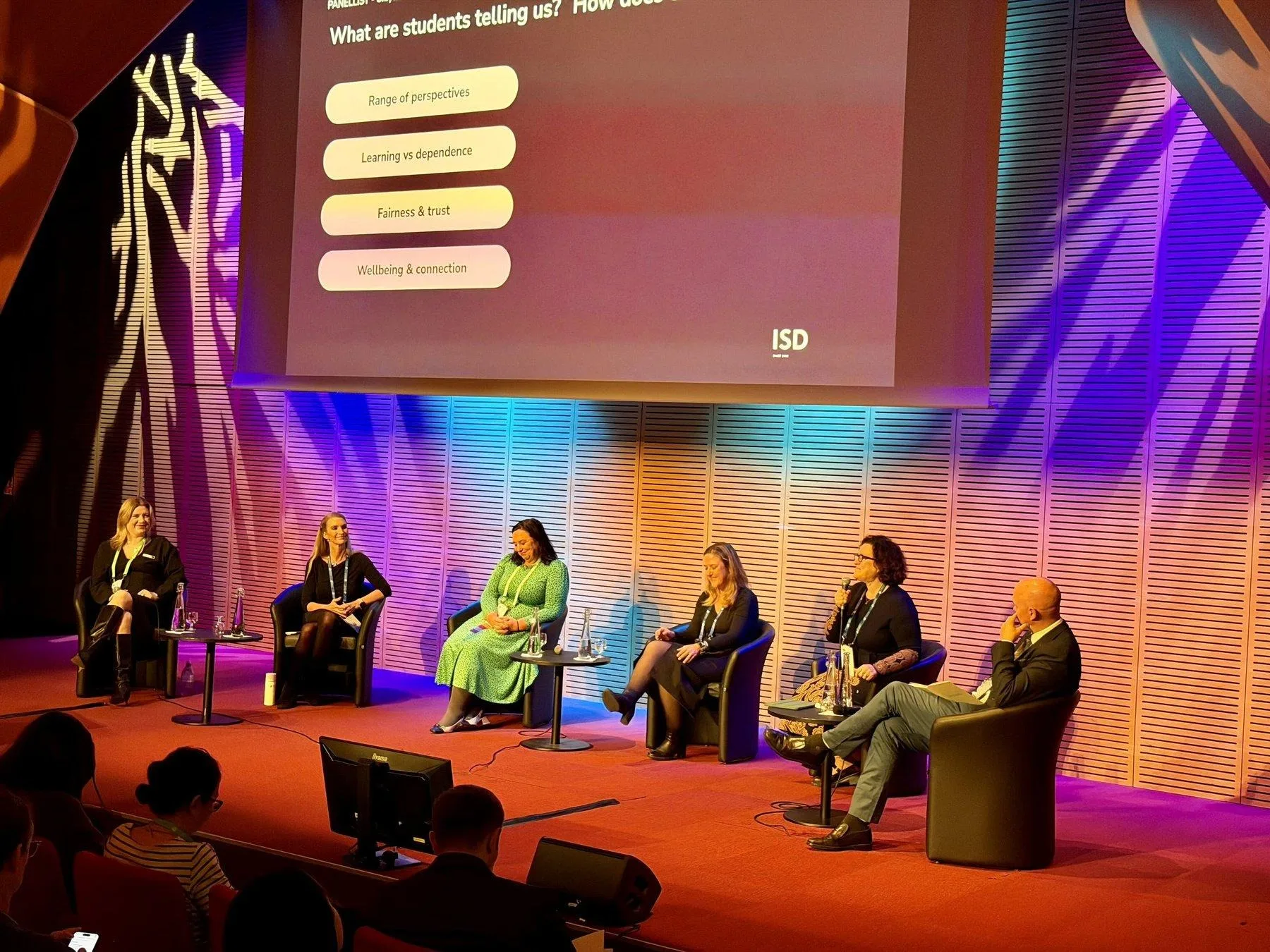
Sibylle shares what ISD's students told the school: a range of perspectives, learning vs dependence, fairness and trust, and well-being
From Hearing Students to Working with Them
ISD is using these insights to shape its evolving approach to AI education, with a focus on human capabilities, foundational literacies, responsible use, and adaptive practices. Sibylle singled out one idea in particular.
"I would argue that learning how to be human together is a foundational literacy that schools need to be responsible for."
For ISD, this connects to a longstanding commitment at the heart of its IB continuum education: developing confident, creative, critical and compassionate thinkers. The school's educational purpose remains consistent, even as the context in which students develop and apply these capabilities has changed profoundly over its 50 years of IB education. The IB's emphasis on inquiry, reflection and principled action is particularly relevant today. As AI makes seemingly convincing answers increasingly accessible, the ability to question, evaluate and verify information, exercise judgement and build meaningful relationships becomes all the more important.
The bigger change, however, is in who has a seat at the table when decisions are made. In one recording, Lucas (Grade 11) argued that students and teachers need shared ethical ground and, above all, “openness and honesty” about their AI use.
Following survey analysis and focus group conversations, ISD now incorporates student perspectives into AI professional development planning and the ongoing review of its AI guidelines. Their contributions help shape shared expectations. This moves the school from “we’ve listened to them” towards learning from and with students.
Laying Foundations Before the DP
In the Q&A, a teacher from the British School of Rio asked how schools can make sure AI doesn't undermine the independent work the DP depends on, such as the TOK essay, the extended essay, and internal assessments.
"This is exactly why we said we need to learn from our students," Sibylle said.
Even Grade 5 students want to engage in dialogue. They are already wondering when AI supports their understanding and when it takes over their thinking, even if we do not use commercial generative AI with them at school.
Dani, from ISD’s Class of 2026, offered a practical example in his video message. He described using Gemini Study Mode to scaffold learning for difficult Mathematics AA HL problems. He urged educators to guide their students to use such tools to support learning.
Much of this groundwork begins long before students use AI at school. Through early PYP inquiry and numeracy, they learn to question, reason and evaluate evidence. As they progress through the continuum, they apply these same skills to increasingly complex situations, including deciding when AI-generated information can be trusted.
In the MYP and DP, this extends to more explicit conversations about responsible AI use. Teachers can develop subject-specific guidance and seek student feedback, while students make their own commitments. Together, they can revisit expectations as technologies evolve. Authentic, non-judgemental dialogue is essential.
Learning with Students
ISD's approach starts from an admission most schools would recognise: no one has AI fully worked out. Listening to students has challenged assumptions about learning, assessment, motivation, trust and relationships in an increasingly AI-enabled world.
The school is now involving students more actively in shaping its approach to AI, including through professional learning and the review of its guidelines. These conversations create opportunities for adults and students to learn from and with one another.
ISD will continue exploring alongside students the education and human capabilities that matter most today. This takes openness and a willingness to revisit established practices. It's slower than handing down a policy, but students have a greater stake in decisions they've helped shape.
This post is part of a series from Faria's AI panel at the IB Global Conference in Lyon. Read the rest of the series by visiting our resource centre.
Connect with Sibylle here: https://www.linkedin.com/in/sibylleharth/