


-Banner.webp)

Written by Tom Brodie
ManageBac+ Curriculum Coordinator
Eagle eyed CP and MYP users may have noted a change in vocabulary on ManageBac+ recently.
We have updated the vocabulary from Service as Action in the MYP, or Service Learning in the CP, to Community Engagement. But why?
Well this is following IB guidance and a clear indication of this change of vocabulary across the programmes. However, having been involved with examining this change in depth, and its impact on the IB programmes, I thought it worth pausing and considering it in a little more detail and most notably how it should affect your practice.
The “Problem” with Service
The phrase “service” has, itself, become somewhat problematic in recent decades. The implication with this word is “help” or “assistance”. However, what it doesn’t suggest is working with someone, more for someone.
At its worst it has a colonialistic inference of doing something for people who “can’t” do it themselves or who “don’t know better”. In 2026 we would hope that we could do better, and want better, for our students' education.
Whilst we still want to develop within our students a sense of unselfishness, and of the need to help others, we want to ensure that those they aim to assist are an integral part of the process and of our students' learning.
The Switch to “Community Engagement”
This new vocabulary has been around for a while. In the 2016 CAS guide the phrase Service is defined as,
This definition remains. However, in the CP, MYP and PYP the change from Service to Community Engagement aims to bring this definition to life.
What Does This Mean for Me, My Students and Classroom?
With this change, you have an opportunity to run a check on how it is that you “do service” in your school. Are your students engaging with the community? Are your students modelling this key aspect of an international education?
7 Practical Steps to Improve Community Engagement
1. Develop a Community Engagement Set of Contacts.
By this I mean organisations that are willing and able to enter into a reciprocal relationship.
Reciprocal, definition, a benefit for the individuals, organization or cause and a benefit for your students too. Benefits for both.
This stage may need some time and development. Initially review what is available in your community. What organisations are in your locale? What organisations are within your parent body? What genuine community needs are there?
I recommend each school generate a “black book” of partnerships, organisations who can support them in their mission. Community Engagement is a big part of this contact list. It is possible that your students, or CAS committee, can take an active role in developing and nurturing this list.
2. Develop Relationships with These Organisations Through Dialogue.
When reaching out to potential partners, explain in what ways you intend these relationships to be reciprocal.
Students can provide many things; enthusiasm, labour, ideas, fundraising, advocacy.
What is it that the organisations need and what is it that they can provide in return? Perhaps it is education or mentorship, perhaps it is structure?
This can be time consuming, but can also be part of a long term plan. True partnerships are reciprocal.
I recommend that rather than try to talk to everyone individually, schools plan a partnership evening where school leaders, organisations and even pupils, can meet, discuss and network. This is a great way to show value to and of your community.
Top tip: Invite the local press to learn about these initiatives. It builds interest and brings more opportunities.
3. Review How These Relationships and Needs Fit into Your Current Learning and Provision.
Whilst CAS activities are normally driven by students with light support by teachers, teachers of younger students tend to take a more active role in shaping community engagement opportunities. Ideally, they would connect these opportunities to learning through unit and lesson plans.
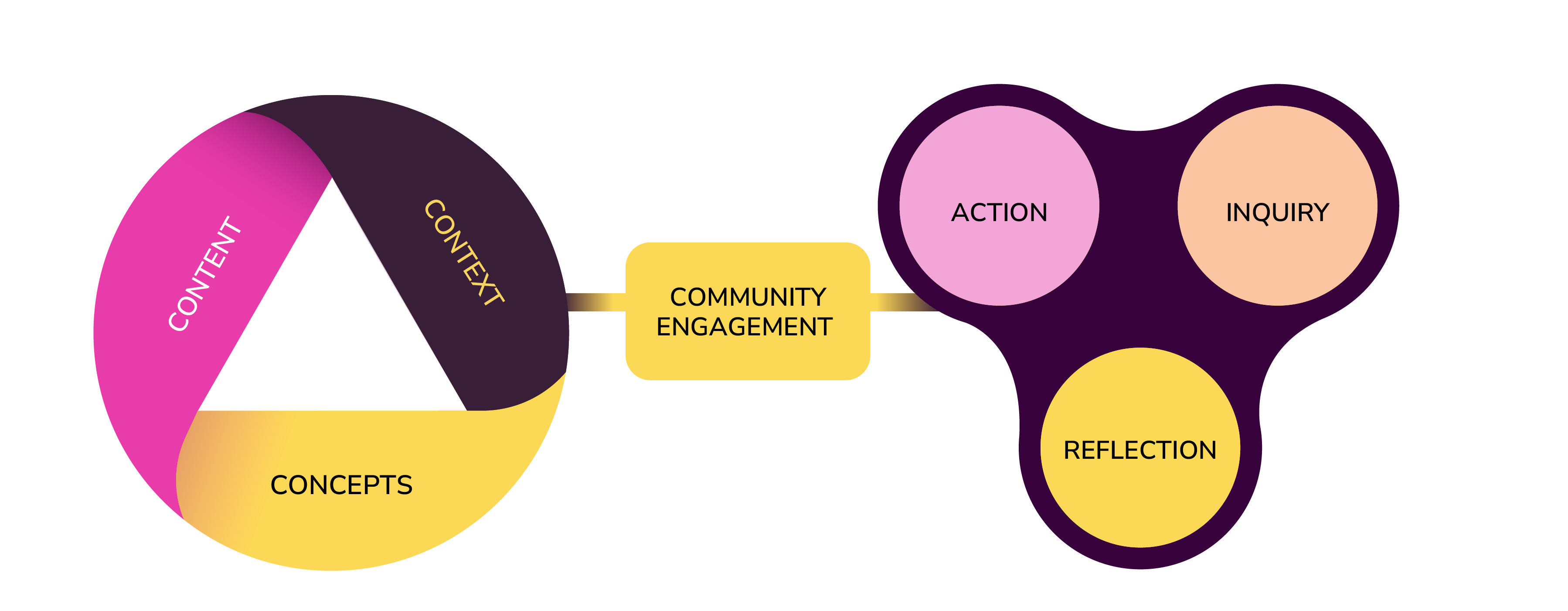
CE requires learners to be applying their skills, inquiring, reflecting and contributing constructively.
Start small and build up. Which units are you teaching with genuine community connection? Which could be easily adapted to a local partner?
Here are two great examples from my past.
A PYP class was learning about the water cycle. A CAS project for IB Diploma students was raising funds for Ryan’s Well. A parent’s company ran a local drilling company. These three areas worked together. Learning about water, wells, filtration. They funded a well site, then the older students visited wells that were built in remote African villages whilst also learning about the water use in their local communities.
A DP History class was learning about Primary Data Collection. Next to the school was a home for the elderly who had identified that the residents did not have many visitors. The young people didn’t want to visit, their original view was that they are “too smelly, they have nothing to say, I don’t know how to talk to them”.
The DP History teacher made it into a structured Primary Data Collection project. Students were assigned one person to visit, learn about and to publish a memoir of. Each week was a specific topic to discuss:
- Early childhood.
- School
- Sports
- The War
- Career
- Family
Once the pairs had something to talk about, deep, rich conversations ensued.
Loneliness was alleviated, and the students were really enthusiastic about the project and looked forward to the weekly sessions.
What if there is a genuine need but no organisation to meet it?
Perhaps it is time for you to start from scratch. A brave and courageous thing to do. However, you can set up a small charity that can have a meaningful impact very quickly and easily. If you want more inspiration for this look at the CAS Changemakers.
4. Review How You Build CE into Your Programme.
(https://resources.ibo.org/ib/works/edu_11162-433687?lang=en)
Are students really engaged in the inquiry stage?
This is often seen by teachers as the “risky” part. Allowing students to drive their own inquiry and learning. I can appreciate this as it seems like as a teacher you hand over control.
However, the risk brings reward of really genuinely engaged students - they pick things they genuinely care about and want to change. It is rare that they are allowed control of their own learning and projects. Students LOVE the opportunity to engage in this.
Is reflection given the time and space it necessitates?
Within Community Engagement these are all important stages rather than just rushing to the Action or Service part - the “doing” part, the “fun” part.
Reflection needs time, space and structure.
The other parts build understanding and permanence of learning. Taking time to inquire and reflect is what makes a CE experience a permanent memory and part of your student’s learning journey.
5. Ensure Someone, or Better Still Everyone, Knows What CE Is Being Undertaken in the School, Across the School.
Within your school, depending on its size and number of programmes, I would advocate for having a mixture of small projects and longer, more engaging ones. Projects that repeat annually and projects that respond to a short term need.
Without everyone knowing across the school true opportunities for collaboration may be missed.
That PYP project that inspires a DP student to assist, that CAS project that is matched by a PYP unit plan and everything in between. Even just that MYP CE which matches what a DP teacher did full time in a previous career.
Community Engagement is not just a job for the coordinator - every administrator, teacher, and student needs to be engaged.
Cast the net wide for other members of your school community who may want to get involved.
Baby steps - make sure everyone understands what the vocabulary means and how it connects to them and their learning.
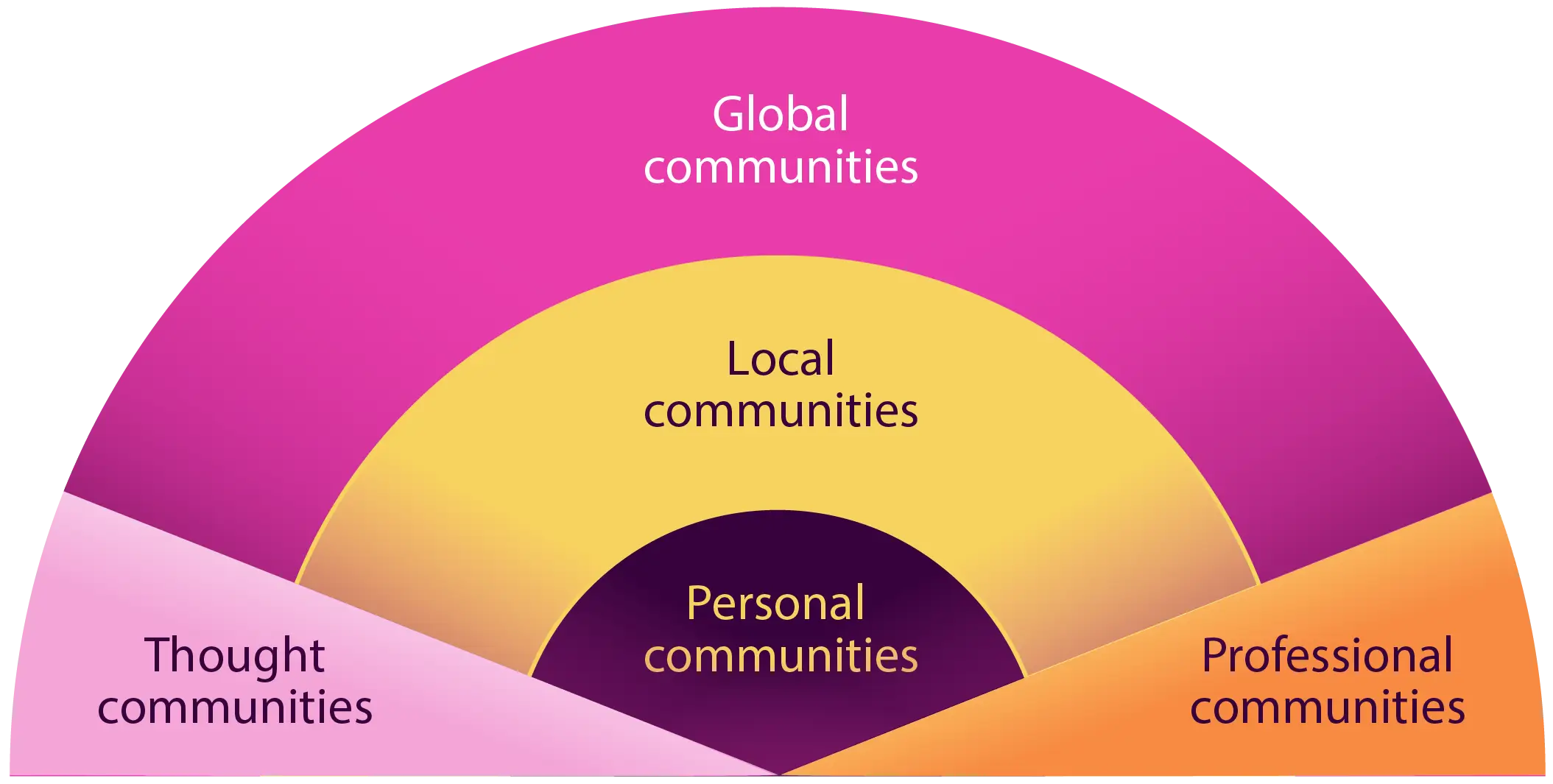
6. A Wider Definition of “Community”
All of us in service learning have heard the phrase “Think Global, Act Local”. This remains true but I think we can add more nuance than that. The IB has published the following diagram to support the idea of community;
(https://resources.ibo.org/ib/works/edu_11162-433687?root=1.6.2.2.9&lang=en)
Within your faculty, department, team or classroom take the time to discuss what this diagram means for you in practice.
7. Build Your Own Systems.
CE talks a great deal about systems and the role that they play in society.
However, a strong Community Engagement, Service, or CAS programme requires a good system. A system can be built up by a person but if a person leaves then the system should carry on meeting its aims.
Community Engagement is where learning, skills and knowledge really hits the real-world. Within any education programme we want our students to be prepared to meet the needs of the real-world and to develop the attributes that solve its problems. This is an incredible challenge but something that really does make an IB education unique. Your students are unlikely to remember your funnest numeracy lesson but they will remember the time they made a difference and why.
What do I mean by a system?
Well this can vary from school to school. It could mean a clear path for partners to engage with the school. It could mean a clear communication structure between partners and the school. It could mean a clear set of expectations as to what a partner can expect from the school and what the school expects from a partner. It could mean all of these things.
However, a system isn’t a one-off relationship between one member of staff and a partner organization. The process for this needs to be recorded and kept.
ManageBac+ systematic support features.
- Unit planning with inbuilt space for Community Engagement links.
- Student record keeping with built in Learning Outcomes that enable easy tracking.
- Project Based Learning templates and support for class wide activities.
Much of this is editable by the school to meet their own needs and vocabulary.
Good luck.
More Information, Guidance, Inspiration and Sources:
IB Community Engagement Policy
https://www.edvolution.services/free-resource-best-practices-for-school-community-partnerships-1