




The IB released the new MYP From Principles into Practice in August 2022. This is especially exciting because it contains some important changes to the document since its initial release for the MYP Next Chapter in May 2014. The revised document connects with the new Programme Standards and Practices and the Enhancing the MYP project to improve and update the MYP programme. Below is a collection of the updates:
 The guide has been updated so that it reflects the latest Programme Standards and Practices (PSP).
 The written/taught/assessed curriculum model has been updated to reflect new terminology: planned/designed, delivered, and assessed curriculum.
 References to the Personal Project guide and Community Project guide have been updated to reflect the new editions.
 “Academic Integrity” has been used consistently throughout the document.
 Access/Admission Policy requirements have been added to reflect PSP requirements.
 Information has been added on the latest MYP programme development process, Enhancing the MYP.
| MYP flexibility and differentiation | Conceptual and contextual MYP framework | MYP core elements |
|---|---|---|
| Subject group flexibility | Approaches to teaching | Approaches to learning |
| Learning progressions | Unit planning (guidance, tools and requirements) | Service as action |
| Assessment | Interdisciplinary teaching and learning | IB learner profile |
| Projects |
 The MYP Assessment criteria have been updated to reflect the new subject guides:
 (Source: MYP: From principles into practice, p.81, International Baccalaureate, 2022)

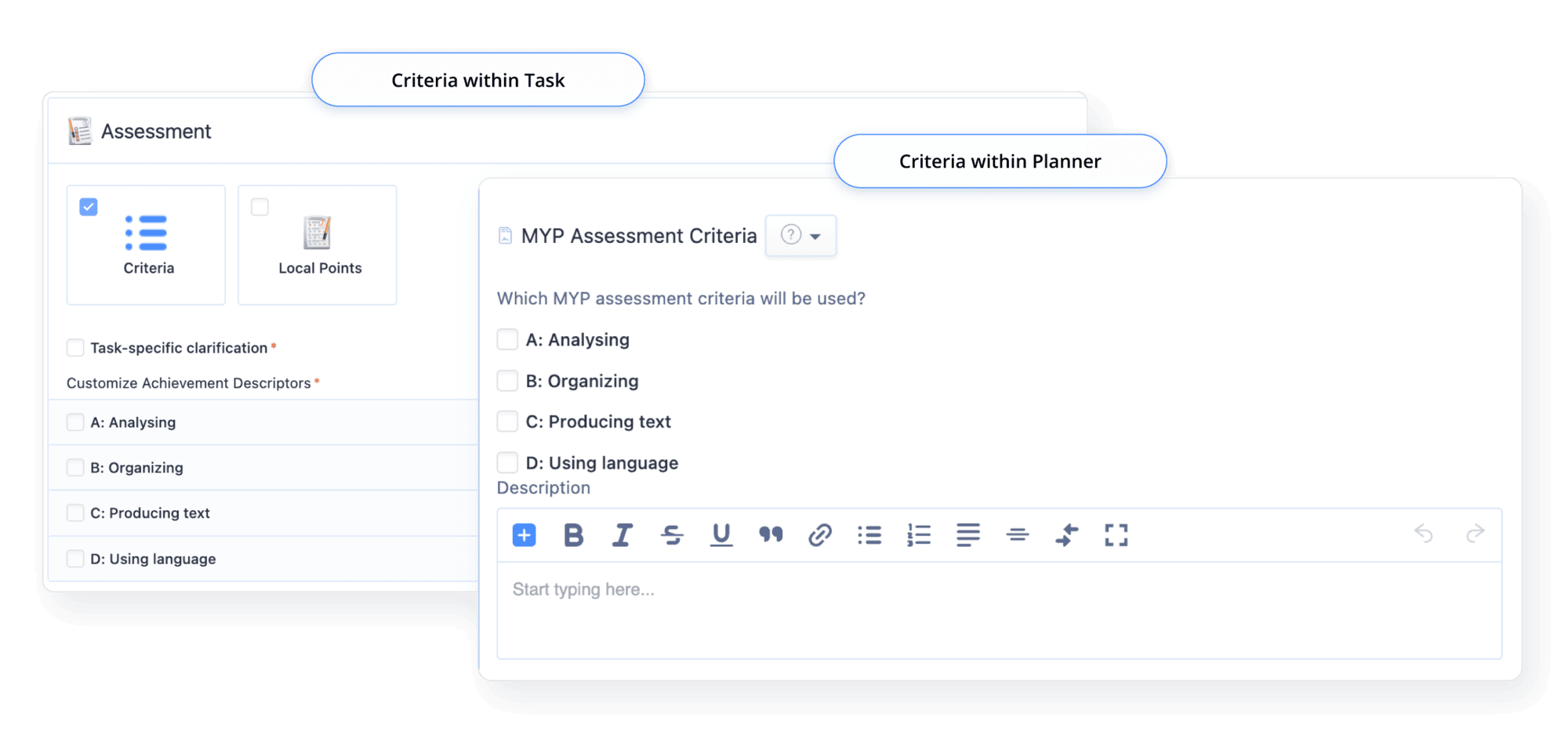
Remember! All MYP assessment criteria automatically appear for selection in ManageBac when undertaking unit planning or assigning a task. From tasks this automatically syncs to your Gradebook.
 In addition to these new updates in the August 2022 revision, previous updates to the MYP: From Principles into Practice should also be noted. These include: “Suggested” added to the ATL appendix chart, which means that MYP schools can choose to follow the ATL skill chart and/or develop their own ATL skills. Additionally, the appendix added the AID model: Agency, Information, Design to technology learning to help guide teachers and students in developing technology education at the school. This model focuses on three factors in technology learning: knowing how to find the right information; using technology ethically and responsibly to help oneself, others and the environment around us; and finally, being able to use technology to create and share.
 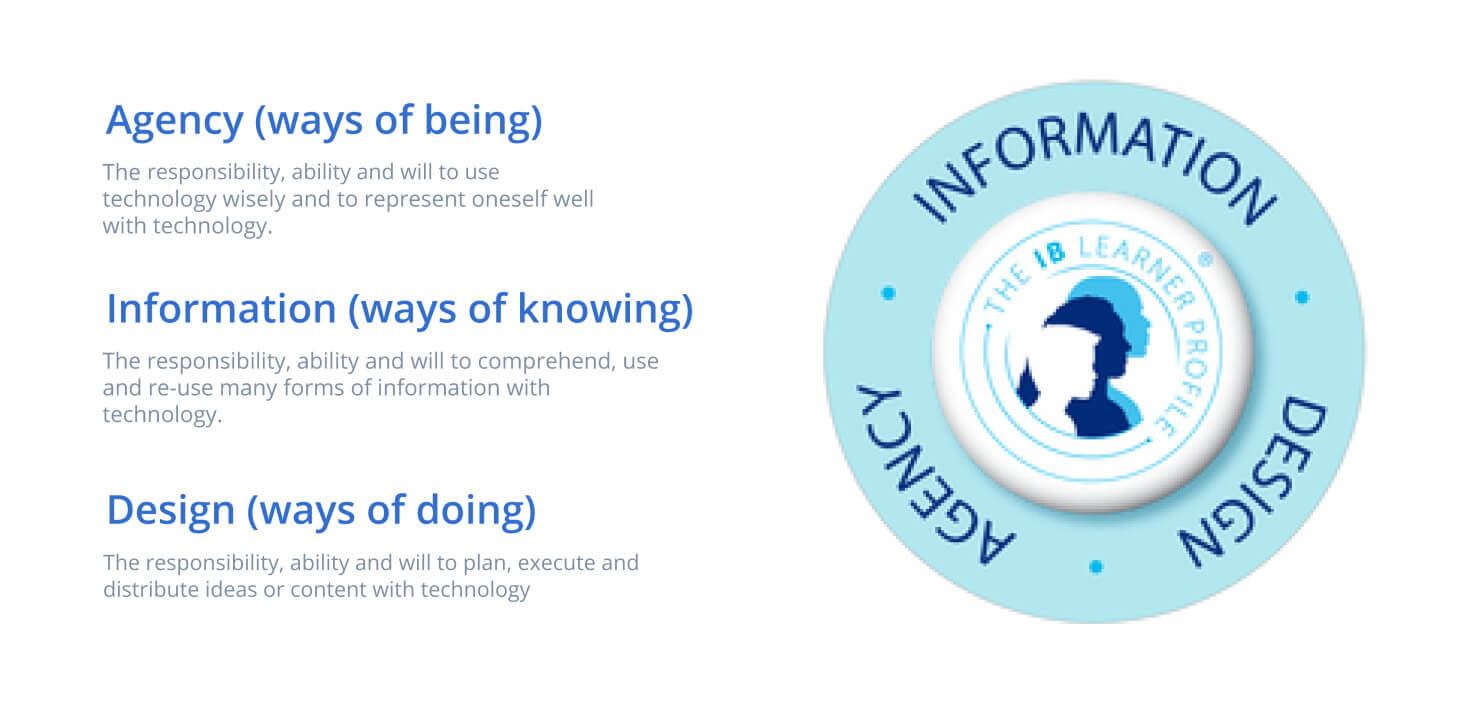 (Source: MYP: From Principles into Practice, p.136, International Baccalaureate, 2022)
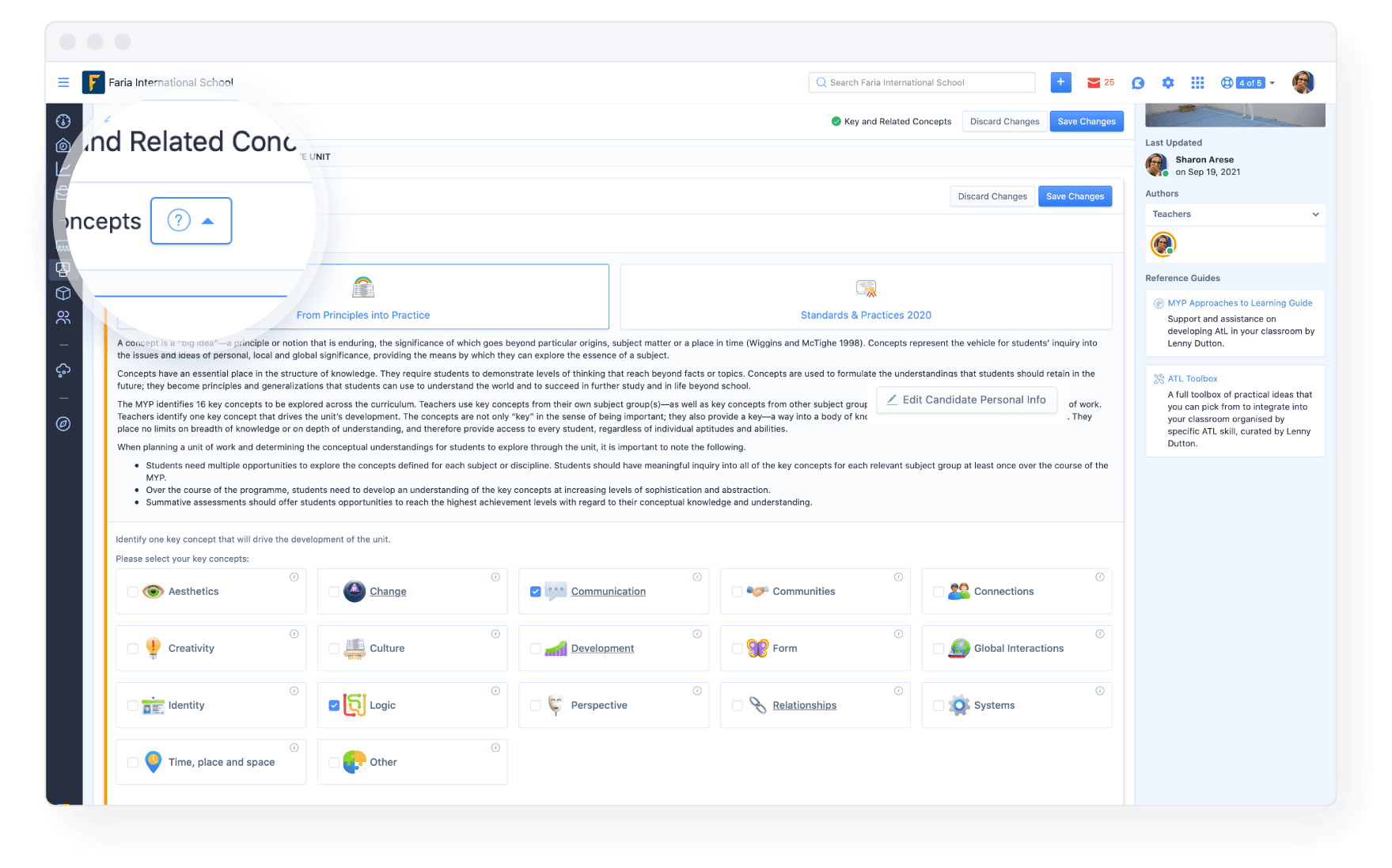
Remember! Within the ManageBac MYP unit planer you can find assistance and links to the relevant parts of the Principles into Practice guidance by clicking on the ? symbol.
 All of these additions point to an exciting, changing time within the MYP as it enters a new chapter. If you have any questions or would like to collaborate on resources, Don’t hesitate to connect with me with any additional questions. I would always love to work with other like-minded IB educators. I hope this summary was helpful, and wish you all the best on your MYP journey. References: International Baccalaureate. (2022, August). MYP: From Principles into Practice. Cardiff, Wales, United Kingdom.
About the Author

Jarrett Brown is currently the Assistant Head of Secondary and MYP Coordinator at Leman International School, a Nord Anglia school, in Chengdu, China. An experienced educator, he is also an MYP Workshop Leader, Site Visitor, Reader, and Building Quality Curriculum Senior Reviewer, as well as MYP Subject Leader for ManageBac.
Like what you see?
If you’re looking for a learning platform that is comprehensively aligned to the IB curriculum, ManageBac is for you! Contact our team to discuss how we can support your school.